Lynn Lions: Base ball in the shoe city
Ghost League Archive: FILE 0001
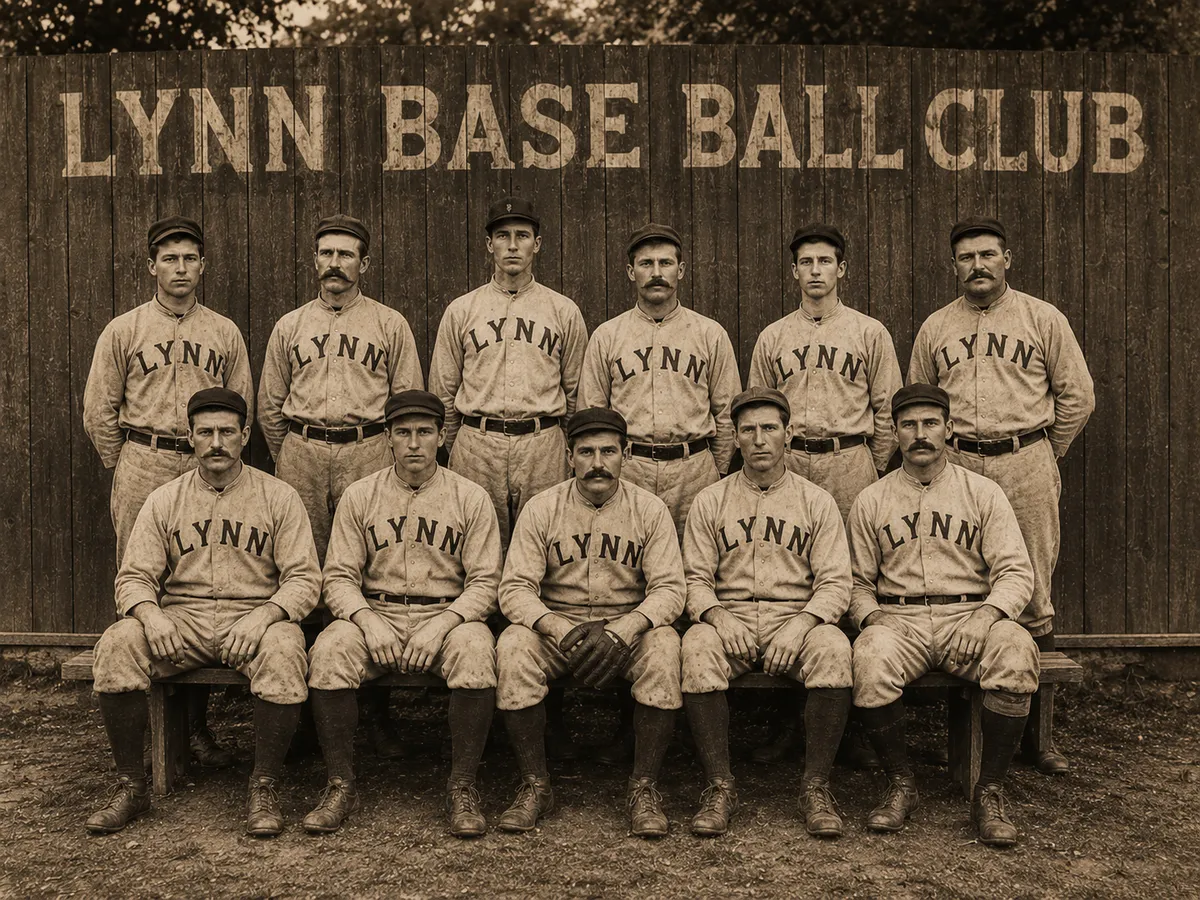
LYNN LIONS
Lynn, Massachusetts • New England League • 1880s

A Lion in the Shoe City
Before Boston became the center of New England baseball, professional clubs were scattered throughout the region’s mill towns, factory cities and working-class communities.
Lynn, Massachusetts was one of them.
Known nationally for its booming shoe industry, Lynn had already been home to organized professional baseball by the 1870s. During the 1880s, one of the city’s clubs became known as the Lynn Lions.
The Lions competed in the New England League, part of the rapidly expanding world of professional baseball that existed beyond the major leagues. These were not insignificant neighborhood clubs. They traveled from city to city, charged admission, signed professional players and represented their communities against rivals throughout New England.
In 1887, Lynn shared the league with clubs from Lowell, Portland, Manchester, Lawrence, Haverhill and nearby Salem.
The Lions finished the season with a 40–64 record.
It wasn't a championship year.
But more than a century later, wins and losses aren't what make the Lynn Lions worth remembering.
THE ARCHIVE RECORD
Club: Lynn Lions
Location: Lynn, Massachusetts
Era: 1880s
League: New England League
1887 Record: 40–64
Managers: George Brackett and Henry Murphy
Home Grounds: Lynn, Massachusetts
Sport: Base Ball
BASEBALL IN THE SHOE CITY
Lynn was one of America's great shoe-manufacturing centers during the nineteenth century. Factories filled the city and thousands of workers made their living producing shoes.
Baseball grew alongside that industrial culture.
The city's professional baseball history stretched back at least to the Lynn Live Oaks of 1877, and Lynn would continue fielding professional clubs under a remarkable collection of names.
Among them were the Live Oaks, Lions, Shoemakers, Leonardites, Fighters, Pirates, Pipers, Papooses, Red Sox and Tigers.
Few names were more appropriate than the Shoemakers, which Lynn clubs would use after the Lions era.
The Lions belonged to an earlier chapter.
PLAYERS WHO PASSED THROUGH LYNN
The Lions' roster included players whose baseball lives extended well beyond Lynn.
Pitcher Jim Devlin was one of the club's standout performers, recording an impressive 1.84 earned-run average during the 1887 season.
Another Lion, Charlie Sprague, played both in the field and on the mound for Lynn before reaching the major leagues later that year.
Pitcher Bill Coughlin also began his professional career with Lynn in 1887.
And Coughlin left behind exactly the sort of story that makes nineteenth-century baseball so fascinating.
During the season, manager Henry Murphy reportedly fined Coughlin and several teammates for breaking curfew. Coughlin eventually worked his way back into his manager's good graces after a strong performance against Manchester.
More than 130 years later, it is a small glimpse into life on a professional baseball club when the sport was still finding its identity.
WHAT HAPPENED TO THE LIONS?
Teams in nineteenth-century baseball rarely possessed the permanent identities we associate with professional franchises today.
Names changed. Leagues reorganized. Clubs folded and returned. Owners came and went.
Lynn was no exception.
By the end of the decade, the Lions identity disappeared, while professional baseball in Lynn continued under other names—including the particularly appropriate Lynn Shoemakers.
The Lions became one of the many short-lived clubs scattered throughout baseball's early professional landscape.
For a few seasons, though, they represented the Shoe City on the diamond.
And that is enough to earn them a place in the Archive.
Click here to view our Lynn Lions merchandise
GHOST LEAGUE ARCHIVE
Forgotten Teams. Unforgettable Legacy.
HISTORICAL NOTE:
Ghost League Supply Co. researches each Archive entry using available historical records and sources. Because many early teams were poorly documented, dates, records, names and other details may vary between sources.
Some images and artwork appearing in the League Archive are AI-assisted historical interpretations created for illustrative purposes and should not be considered authentic photographs, official team artwork or exact historical reconstructions.